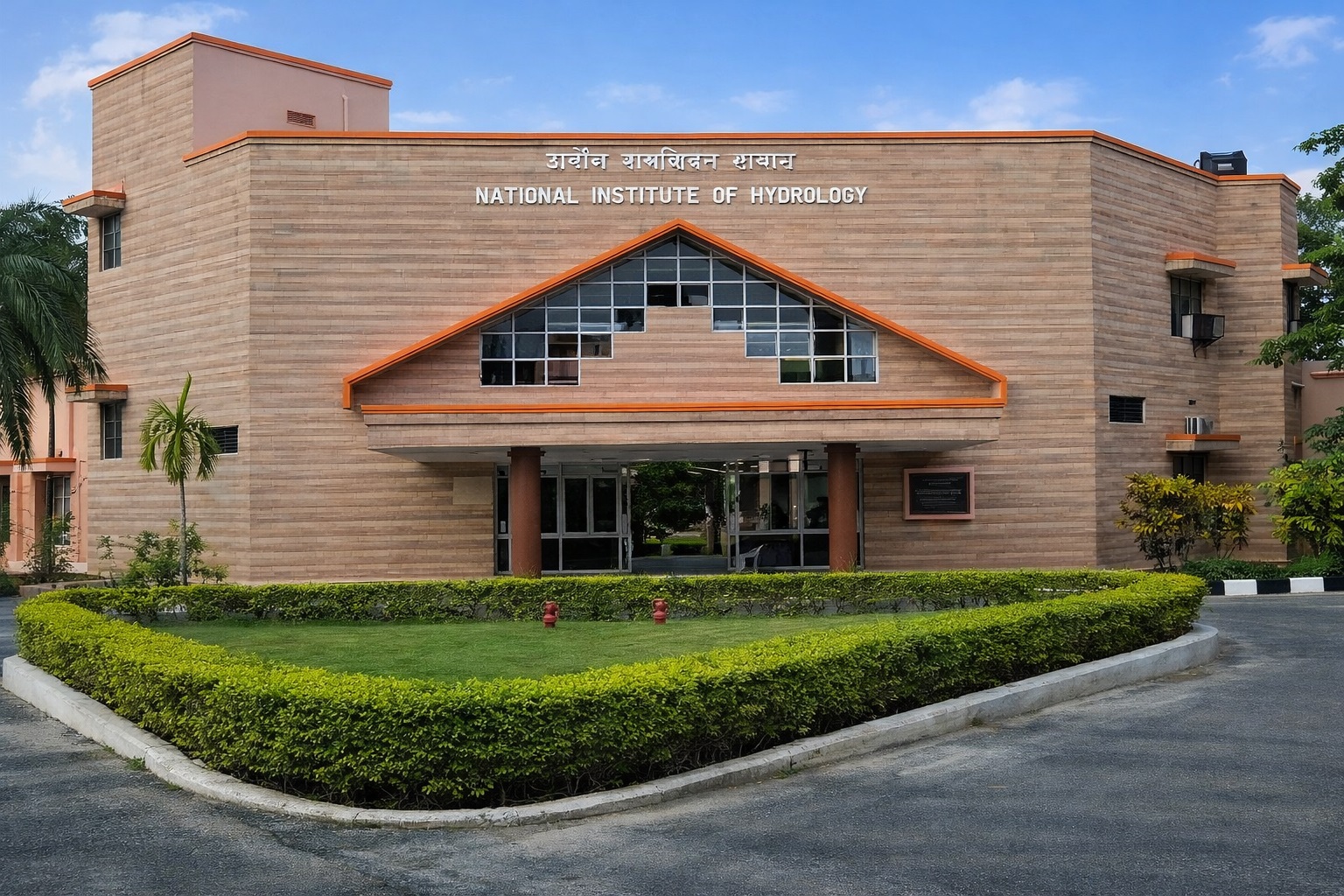
राष्ट्रीय जलविज्ञान संस्थान, रुड़की, भारत



Dr. V S Jeyakanthan
Scientist-G & Scientist-In-Charge
National Institute of Hydrology
Deltaic Regional Centre
Siddhartha Nagar, Kakinada– 533003 (Andra Pradesh), India
Ph: 0884-2372254, Fax: 0884-2350054
Email: drc[dot]nihr[at]gov[dot]in
About Regional Centre:
The Deltaic Regional Centre (DRC) of the National Institute of Hydrology, established in 1991 at Kakinada, Andhra Pradesh, serves the east coastal regions of West Bengal, Odisha, Andhra Pradesh, Puducherry, Tamil Nadu, and the Andaman & Nicobar Islands, focusing on research, consultancy, and capacity building in coastal and deltaic hydrology. The vision of the Centre is to address the specific hydrologic challenges of the East Coastal and deltaic regions of India in close collaboration with state and central agencies. The East Coast, enriched with substantial utilizable water resources, receives flows from major central and peninsular rivers such as the Mahanadi, Godavari, Krishna, and Cauvery, which drain into the Bay of Bengal through extensive river deltas. However, being a coastal region, it faces significant groundwater quality issues in addition to surface water concerns. Salinization of shallow aquifers is primarily driven by backwater ingress through streams and rivers, aquaculture practices, and excessive groundwater extraction, while poor drainage, irrigation return flows, and industrial effluents further exacerbate the problem. To address these challenges, the Centre has identified key thrust areas, including urban hydrology, reservoir sedimentation, real-time flood forecasting, assessment of climate change impacts on river flows, flash flood studies in ungauged basins, groundwater contamination from point and non-point sources, and saltwater intrusion modelling. The Centre undertakes studies on rainfall–recharge estimation, runoff modelling, reservoir sedimentation, submarine groundwater discharge, urban hydrology, flash floods, groundwater quality, groundwater flow and transport modelling, and seawater intrusion mechanisms.
The Centre is well-equipped with advanced facilities, including a Water Quality Laboratory, Hydro-Meteorological Observatory, Soil Water Laboratory, Remote Sensing & GIS tools, and specialized hydrological modelling software. Collaborating with State and Central agencies, academic institutions, and research organizations, DRC also executes consultancy projects for major industries and addresses region-specific water challenges such as salinization, pollution, and climate change impacts. The Centre organizes training programmes, workshops, and seminars to promote sustainable water resource management in coastal and deltaic environments. In addition to research, the Centre actively conducts user interaction workshops, brainstorming sessions, and seminars for professionals in hydrology and water resources, and is involved in the implementation of various Government of India programmes in the sector. The Centre actively participates in review meetings of the State Water Resources Departments of Odisha, Tamil Nadu, and Andhra Pradesh, and also contributes technical expertise to National Green Tribunal cases. In addition, it imparts training on various facets of hydrology, provides guidance for M.Tech and Ph.D. thesis work, and conducts public awareness programmes.
Major Studies Carried out and Current R&D Activities by the Centre :
The DRC has undertaken several major studies addressing critical hydrological challenges of coastal and deltaic regions. The significant works comprise rainfall–recharge estimation in the Godavari, Pennar, Krishna, and Mahanadi deltas; rainfall–runoff modelling for the Sarada, Nagavali, Sagileru, Tambraparani, Baitarani, Brahamani, and Tammileru rivers; reservoir sedimentation assessments for Poondi, Vaigai, Somasila, Nagarjuna Sagar, and Singoor reservoirs etc., using remote sensing techniques; hydrological time-series modelling and climate change impact analysis for the Sabari sub-basin; submarine groundwater discharge investigations along parts of the Odisha and Andhra Pradesh coasts; urban hydrology studies for Chennai, Hyderabad and Kakinada; flash flood assessments; regional water quality monitoring; recharge–discharge evaluations; and ecological research on wetlands and mangroves.
The Centre has recently completed several notable internal and sponsored studies. The recent studies such as a pilot study on ‘unravelling Submarine Groundwater Discharge (SGD) Zones’ in Andhra Pradesh and Odisha (Mission SGD); identification of groundwater salinity sources in the Godavari Delta; aquifer mapping and multi-aquifer system behavior assessment for groundwater management in the Gunderu sub-basin; dam break studies for Kandaleru and Pulichintala Dams in Andhra Pradesh; sedimentation assessment of the Hirakud Reservoir in Odisha using optical and microwave remote sensing; river bank filtration studies in coastal alluvium of Andhra Pradesh; identifying recharge and discharge areas of the Palar River Basin in Tamil Nadu; climate change impact assessment on hydroclimatic extremes along the East Coast; and storm water flood management strategies for coastal cities. The Centre has developed a high-performance advanced septic system for rural communities and roadside establishments, conducted urban hydrological studies in Greater Hyderabad. The Centre is engaged in ongoing internal research projects during 2024-25 such as evaluation and post-processing of multi-model precipitation forecasts for flood early warning in the Subarnarekha Basin; evaluating the impact of backwater ingress on groundwater salinity in the Godavari Delta; source sustainability under the Jal Jeevan Mission in Odisha; strom water flood management in a coastal city- a case study; water accounting of the Pennar River Basin using the WA+ framework, seawater intrusion modelling in the Pennar Delta, Andhra Pradesh.